Bullying and Neurodivergent Life: You Don’t Deserve It

Hi, I’m Bunmi. I’m the writer of the David’s Diary series and a few other books, and I’m starting this blog (and a podcast to go with it- link at the bottom if you'd rather listen to this post) to talk about neurodivergent life.
Maybe that’s you. Maybe you’re the parent of a child who is autistic, has ADHD, or is on the spectrum. Either way, you’re welcome here.
I’m also a person of faith. I love Jesus, so that’s always going to be where I’m coming from, because I credit God so much for helping me.

Why faith is part of how I talk about this
There was a time when I carried a card that explained why I sometimes couldn’t talk. They call it selective mutism, though I’ve never understood the word “selective,” because you’re not deciding anything.
Who wants to be unable to talk?
For me, speaking became so stressful and so draining that it felt almost like a panic attack, the kind that makes it hard to get words out. I saved whatever energy I had for my kids and the things I absolutely had to do, and inside there was a lot of pain and stress.
As a child, people can simply understand that you’re quiet.
As an adult, and especially as a parent, you know people expect you to talk and your family needs you to. In places like grocery stores, I kept a small notebook and that card, which explained that I wasn’t being rude. Nobody does this for attention. If anything you get negative attention, because people assume you’re stuck up or being difficult. The card made interactions smoother, and people were kind when they read it.
One day, after coming home from yet another hospital visit, I was standing in my kitchen holding that card, and I felt the presence of Jesus. I know His presence because I’ve felt it before. It’s love personified, and it’s hard to describe, because you only really know certain things by their absence. It’s like drinking diet soda for years and then accidentally getting a regular one: oh, this is what real sugar tastes like.
Jesus’ love is the full-sugar version, and every other kind of love seems secondary.
I used to think a mother’s love was the highest love there is. It’s so sacrificial and all-encompassing. But a mother’s love has fear in it. You’re afraid something will happen to them, or that you’re not doing enough. What I felt from Jesus was like a mother’s love with none of the fear. It’s a love that knows you completely and loves you completely, and it’s also a love that wants more for you. It doesn’t say, “I love you, so stay exactly as you are.” It says, “I love you as you are, and I want you to be free.”
Without any words, I understood that He wanted me to cut up the card.
I did not like that. I was honestly upset. I thought, Jesus, you didn’t live in the 2000s. Have you even been in a grocery store? The fluorescent lights, the endless aisles, the layout that changes every six weeks.
But He asked, so I cut the card in half and threw it away. From that day on, I never had a problem with mutism again. I’ve been able to speak ever since.
I don’t know how He does what He does, and I don’t have answers for why not everyone is healed. I know that can be confusing, and I understand when people say their reality seems to contradict what they hear about Him.
All I know is that He’s loving, He’s good, and He wants good things for us. That’s why I approach neurodivergence, whether it’s ADHD or autism, with faith. In a world where you feel so different, where people misunderstand you and you struggle to understand them, God is for you. Jesus is for you.

Why I wrote David’s Diary
I’m not a perfect person by any stretch. I find social situations overwhelming, and I tend to retreat when I don’t understand something. I started this blog for people like me, and for parents who are walking alongside kids who struggle. I know that life too: the IEPs, the therapy appointments, the cheering your child on while your heart hurts for them. I want you and your children to feel less alone.
That’s also why I wrote the David’s Diary books. I don’t name diagnoses in them, but the characters are coded. David is impulsive, creative, sometimes doesn’t see the impact of what he’s done, and has big ideas that seem brilliant to him.
He also has a huge heart and wants the best for his friends. His best friend Nate doesn’t like tags in his clothes, eats a lot of the same foods, and gets nervous about social things, and he’s also full of wisdom, thoughtfulness and good advice. You see both sides: the struggles, and the gifts.
And you see David pray, honest, kid-like prayers, like “God, make this person stop doing that,” and you see him grow.
When being different gets you noticed
Today’s topic is bullying, which is such a big part of neurodivergent life. When you communicate differently, move differently, or come across as naive or a little spacey or childlike, people notice. Some of them see someone to take advantage of.
Some want to take you under their wing, and an autistic friend and an ADHD friend can be the undefeated combination, like peanut butter and jelly (that’s why I wrote David and Nate the way I did). And some people’s first instinct is to bully.
In my experience it’s often been a group thing. Scapegoating seems to be a bonding technique for a lot of neurotypical kids and teens: someone gets labeled as the weird one, the enemy, the one we don’t want in the group. I don’t fully understand it, but I’ve watched it happen.
It can also happen when we break unspoken social contracts. Many ADHD and autistic people call out the elephant in the room.
We say, “This person is treating everyone badly,” thinking nobody knows. What I’ve learned, and only fairly recently, is that everybody already knows and has decided to be okay with it. When you say it out loud, you become the problem.
Bullying shows up as excluding, mimicking, mocking and gossiping. It can happen anywhere, even in church, where gossip sometimes dresses up as “prayer requests.” For kids today there’s social media on top of everything. I’ve heard of group chats where someone notices things have gone quiet, because everyone else moved to a second chat that excludes one person.
Step one: figuring out what’s happening
For neurodivergent people, the first response to being bullied is usually confusion. It can take a long time to work out what’s going on.
When I was about seventeen, I had my hair done in a curly braided style at a mall. A girl came up and asked where I’d gotten it done, but her face didn’t match her question, and her friends behind her were smiling and laughing. I was confused, then realized they were making fun of me. I answered sincerely anyway, because what else would I do?
Confusion is a sign of a discrepancy: what someone says doesn’t match what you’re feeling about it. Learn to trust that. You may have heard of rejection sensitive dysphoria, the idea that people with ADHD feel offenses that aren’t there. I don’t really buy that. I think there’s a lot of bullying and micro-bullying, and we start noticing it, maybe with some hyper-vigilance.
As adults, we often realize months later that someone insulted us to our face, in the crafty way adults do it. Most bullying these days isn’t a punch. It’s covert.
What to do about it
Once you recognize it, here’s what I’ve found helpful.
Ask questions. Neurodivergent people often have a great deadpan, and it works in our favor. Say, “What do you mean by that?” or “Can you explain that joke?” or repeat their words back and ask what they intended. Do it calmly, not aggressively. People who act sneakily usually don’t want to explain themselves, and the questions tend to disarm them.
Ignore it, sometimes. That can work with someone you won’t see often. I prefer calling things out.
Don’t make kids tough it out. If your child is being bullied every day, feeling sick, getting stomachaches, I don’t believe they should have to suck it up or build a toolkit of comebacks. If this happened at a workplace you’d go to HR. Kids deserve the same. Meet with the parents and the school, or move your child if you need to.
In David’s Diary, David is bullied over a special toy (an interactive robot full of fun facts, honestly the toy of my dreams), and you see all his funny coping schemes, but in the end he does what people of any age need most: he talks to a trusted adult.
At work, document everything. Bullying of neurodivergent adults at work is extremely common. Bullies look for people they think will take it and who don’t have a big circle who’ll hold them accountable.
Find an advocate, go to HR, create a paper trail, and if it’s truly a hostile work environment, consider legal action or a different job. Bullies are often protected by systems, so don’t go it alone.
Find someone outside the situation. An outside voice helps you see what’s going on. If you have no one nearby, there are Facebook groups, Meetup groups, and even Reddit, which is a little weird but can help.
As for me, I don’t let it slide. I’ve walked my kids through bullying and sat in meetings with parents and schools. I know bullied kids are often being hurt themselves, and I believe that, but my child will not be the canvas for another child’s negative emotions.
Talking to your kids
Role-play. Ask, “If someone said this to you, what would you say?”
Tell them it’s not about them. If someone tries to embarrass or humiliate them, it says everything about the other person and nothing about them.
Set the family rule early. In our family we don’t bully, and we stand up for people who are being bullied. Standing up usually has a social cost, but it’s worth it.
A little King David
I modeled David partly on King David, with his impulsivity and his passion for God. He made serious errors, real sins against people, yet he’s called a man after God’s own heart because his repentance was real, and it changed his behavior. By today’s standards he’d be canceled. But look at what he did with his pain: he wrote psalms.
He had enemies, and in one place he prays, “Break the teeth of my enemies.” That’s a very specific prayer, and it’s in the Bible! I don’t necessarily recommend it, but it shows you can tell God exactly what’s going on. Jesus said to pray for our enemies and bless them, so you might pray that they’re blessed with repentance. Let God guide your prayers.
We don’t have to hate anyone, but we do have to protect ourselves. One thing God has pressed on me over and over is that I don’t have to be a doormat, in church or anywhere else. People-pleasing isn’t of God, and God is never a people-pleaser. He wants His children to respect themselves.
So if someone is pushing you around, take it to Him, and find a trusted adult to help you through it. Nobody deserves that. You don’t deserve that.
Thank you for reading, and I hope this helped. This blog is where I’ll keep talking about neurodivergent life: our struggles, our interests, our beautiful hearts, and the God who made us and always wants to help, heal and bless us.
Have the best day.
Bunmi

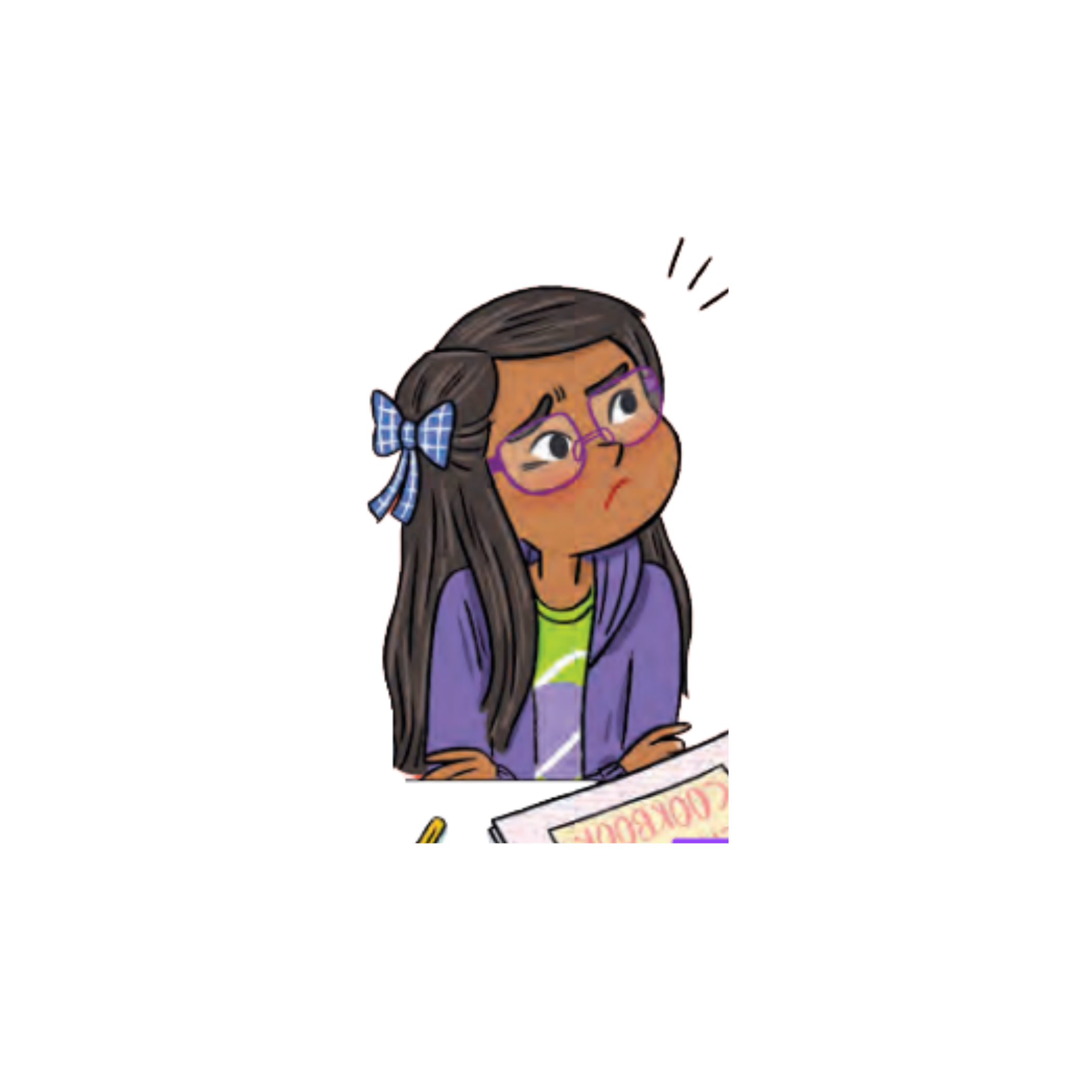
The images for this blog post are from David's Diary Book #3: The Big Bully.
Learn more about the book and browse the series here.


Comments